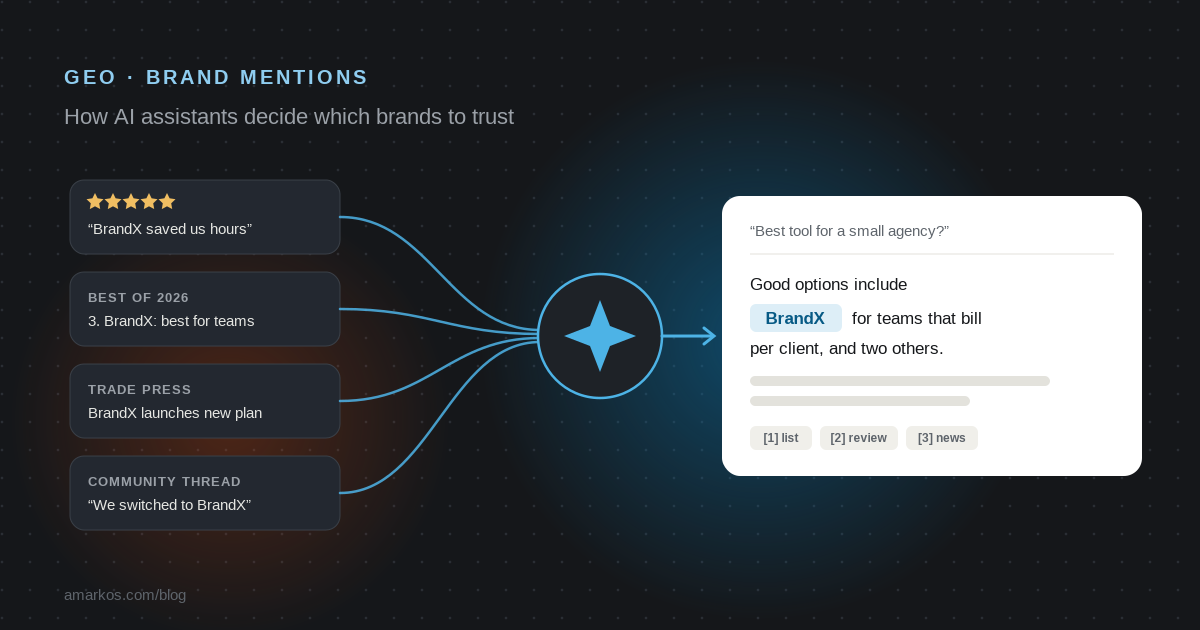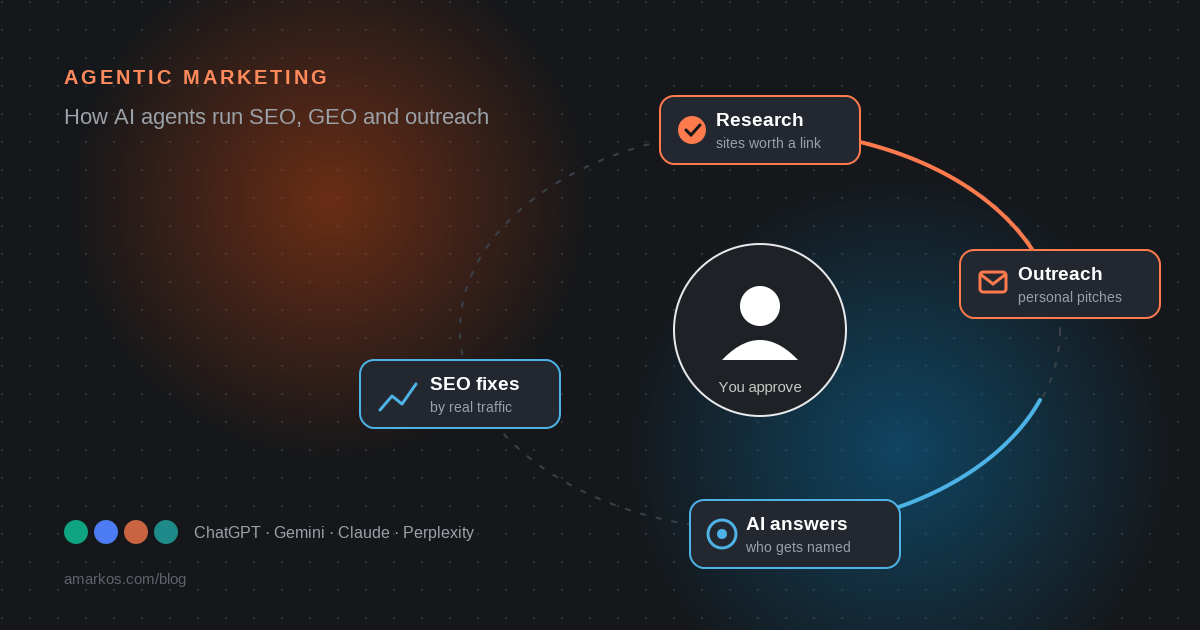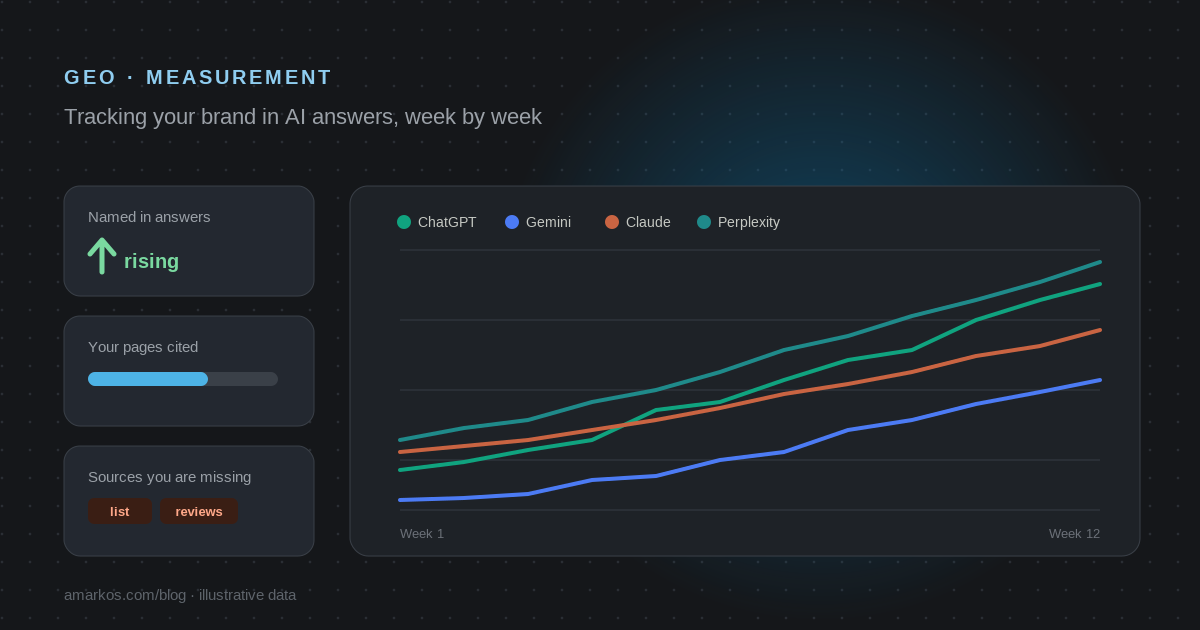
To measure GEO, generative engine optimization, you put a fixed set of your customers' real questions to the AI assistants they use, on a regular schedule, and record whether you are named, how prominently, which of your pages are cited, which competitors appear and which sources the answers lean on. Repeated weekly, those records become trends you can act on: share of answers, citation rate and the sources you are missing from. This article sets out a practical method, the metrics worth tracking, how to connect them to traffic, and the mistakes that make AI visibility numbers misleading.
Why GEO needs its own measurement
SEO has mature measurement. Search Console shows impressions, clicks and positions; rank trackers show where you sit for each keyword. None of that tells you what ChatGPT said about you this morning.
AI answers are harder to measure for a few reasons:
- There is no position one. An answer might name three brands in a sentence, or recommend one and mention two others as alternatives. "Rank" has to be defined.
- Answers vary. Ask the same question twice and you may get a different list. A single check is an anecdote, not a measurement.
- Each assistant is different. ChatGPT, Gemini, Claude and Perplexity search differently, cite differently and often disagree.
- Most assistants offer no analytics for brands. You cannot log in anywhere to see how often ChatGPT recommended you last month.
- Google mixes it in. Google counts clicks and impressions from its AI features, such as AI Overviews, inside the normal Search Console performance report rather than reporting them separately, so you cannot isolate them there.
The answer is to measure the way a researcher would: a consistent sample, a consistent method, repeated over time. If you are new to the idea, our guide to GEO and AEO vs SEO explains what GEO is and how it differs from SEO.
Step 1: Build your question set
Your questions are your keyword list for GEO. Choose them carefully, because changing them later breaks your trend lines.
Aim for twenty to fifty questions for a typical business, written the way customers actually ask, in full sentences. Cover the stages of a decision:
- Problem questions. "How do I stop my website losing traffic?" These are often answered with general advice; being cited here builds authority.
- Category questions. "What is the best SEO tool for a small agency?" The most valuable questions for most businesses.
- Comparison questions. "BrandA vs BrandB for link building?" and "alternatives to BrandA".
- Local questions, if you serve an area. "Best family dentist in Baner, Pune."
- Brand questions. "Is BrandX any good?" and "How much does BrandX cost?" These show whether assistants describe you accurately.
Sources for good questions: your sales and support conversations, the queries in Search Console that are phrased as questions, the "People also ask" boxes in Google, and the questions people post in communities in your niche.
Step 2: Choose the assistants and the settings
Track the assistants your customers use. For most businesses that means ChatGPT, Gemini, Claude and Perplexity, plus Google's AI Overviews where they appear for your queries. Then fix the conditions so your numbers are comparable from week to week:
- Web search on, where the assistant offers it, because that is how most people ask buying questions now and it is what reveals the cited sources.
- A fresh session each time, without chat history or personal memory that could bias the answer.
- The same location, if the questions are local or the market matters.
- The same wording, exactly, every time.
Step 3: Track the metrics that matter
Record each answer, then summarise. These are the metrics that tell you something useful.
| Metric | What it measures | Why it matters |
|---|---|---|
| Mention rate | Share of answers that name you at all | The headline number: are you in the conversation? |
| Share of voice | Your mentions as a share of all brand mentions in the answers | Shows your position against competitors, not just in isolation |
| Prominence | Whether you are named first, in the list, or only as an alternative | Being recommended first is worth far more than a passing mention |
| Citation rate | Share of answers that cite one of your own pages | Shows whether your site is a trusted source, not just a name |
| Cited sources | Which third-party pages the answers rely on | Your outreach list: the sources you need to appear in |
| Accuracy | Whether what is said about you is correct and current | Wrong prices or old products cost sales; they are fixable at the source |
| Competitor share | Who is named most when you are not | Tells you whose sources to study |
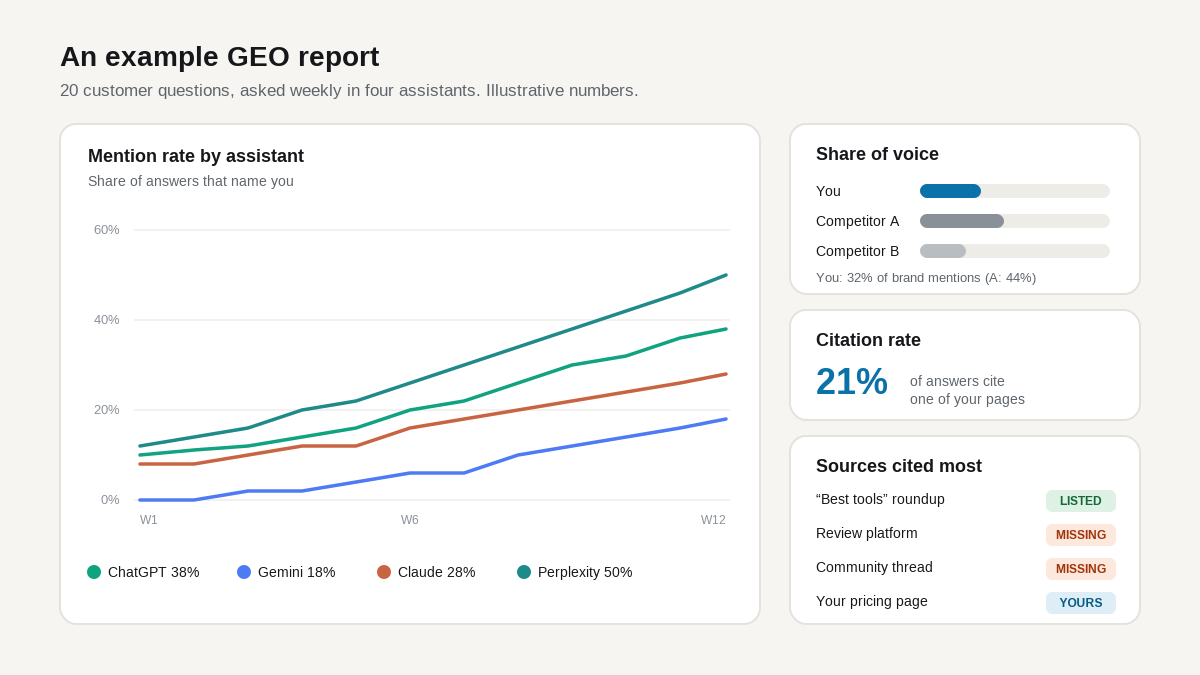
Report each metric per assistant as well as overall. It is common to be well represented in one assistant and absent from another, and the reasons usually differ.
Step 4: Check often enough to see a trend
Because answers vary, a sound method asks each question more than once per check and records the share of runs in which you were named. A question where you appear in two of three runs is in a different place from one where you appear in none, even though a single check might show either.
Weekly checks are a good default. They are frequent enough to see the effect of a new mention or a page change within a month or two, and not so frequent that noise dominates. Keep a simple log of what you changed and when, such as a new roundup mention, a rewritten pricing page or an unblocked crawler, so you can line changes up against the trend.
Step 5: Connect visibility to traffic
AI answers send visits, and those visits can be tracked in your analytics.
- Referrals from assistants. In Google Analytics 4, visits from links in AI answers usually show up as referrals from domains such as
chatgpt.com,perplexity.ai,gemini.google.comandcopilot.microsoft.com. Create a custom channel group called "AI assistants" that matches them, so you can see the total and its trend. - Landing pages. Look at which pages those visits land on. They are usually the pages assistants cite, and they tell you which content is working.
- Branded search. People often hear your name from an assistant and then search for it. A rise in branded impressions in Search Console can be a sign that AI visibility is working, even when the assistant did not send a direct click.
- Ask new customers. A "how did you hear about us?" field with an option for AI assistants is crude but valuable.
Expect AI referral numbers to be small compared with search at first. What matters is the trend and the quality: visitors who arrive after an assistant recommended you often convert well, because they come with a shortlist already made.
Step 6: Turn the numbers into work
Measurement is only useful if it changes what you do next. Each pattern points to a different fix.
- You are never named. The sources the assistants read do not mention you. Use the cited sources list as an outreach plan: lists, reviews, comparisons and communities. Our post on brand mentions in AI search explains how to earn them.
- You are named but never cited. Assistants know you exist but do not trust your pages as a source. Put clear answers near the top of key pages, add structured data and make sure crawlers can read them. The free AI audit checks the basics.
- You are named in one assistant but not another. Compare the sources each one cites. They often draw on different indexes and different kinds of site.
- What is said about you is wrong. Find the source of the wrong fact and ask for a correction, and make sure your own pages state the facts clearly.
- You disappeared suddenly. Check robots.txt and your firewall first. A blocked AI crawler is a common and easily fixed cause; the AI crawler checker shows which bots can read your site.
Common mistakes
- Measuring once. A screenshot of one answer is not a result. Repeat, sample and trend.
- Changing the questions. Add new questions as a separate group rather than rewriting the old ones, or you lose your baseline.
- Tracking only your brand name. Brand questions tell you about accuracy. Category and comparison questions tell you about visibility, and they are where new customers come from.
- Ignoring competitors. Your mention rate can hold steady while a competitor's doubles. Share of voice catches that.
- Treating it as separate from SEO. The pages assistants cite often rank well in Google too. Links, mentions, clear pages and crawlable sites help both.
A simple monthly GEO report
Once a month, a one-page summary is usually enough for a team or a client:
- Mention rate and share of voice, overall and per assistant, against last month.
- The three questions that improved most, and the three that got worse.
- Citation rate, and which of your pages were cited.
- The ten third-party sources cited most, marked where you are present or missing.
- Any wrong facts found, and what was done about them.
- Visits from AI assistants in analytics, and the pages they landed on.
- What changed this month, and what is planned next.
How Amarkos helps
Amarkos tracks AI search visibility for you. Every week its agents put your customers' questions to ChatGPT, Gemini, Claude and Perplexity with live search on, record who is named and which pages are cited, and show the trend beside your Search Console and Analytics data. The sources you are missing from become outreach targets for its link building agents, so measurement turns directly into work. See AI search visibility, or try a single question free with Does AI recommend you?
See every week who ChatGPT, Gemini, Claude and Perplexity name for your customers’ questions, and which pages they cite.
Questions
What is a good AI visibility score?
There is no universal benchmark, because it depends on your category, your competitors and the questions you track. Compare yourself with your own past results and with your competitors' share of voice on the same questions. Moving from not being named to being named in a steady share of answers for your key category questions is real progress.
How often should I check AI answers?
Weekly is a good default. Answers vary from one ask to the next, so ask each question more than once per check and look at the trend over several weeks rather than any single result.
Can I see ChatGPT traffic in Google Analytics?
Yes, when a visitor clicks a link in an answer. Visits usually appear as referrals from domains such as chatgpt.com, perplexity.ai and gemini.google.com. Grouping them into a custom channel makes the trend easy to follow. People who hear your name and search for it later appear as branded search instead.
Does Google Search Console show AI Overviews data?
Google includes clicks and impressions from its AI features in the regular Search Console performance report, but does not currently offer a separate filter for them. To see whether AI Overviews mention you, check the queries that matter to you directly or use a tracking tool.